The QR Code Is Back - and It's Staying
For a decade, QR codes felt like a failed experiment. Clunky, slow to scan, requiring a dedicated app nobody wanted to download. Then the pandemic hit, contactless everything became mandatory, and suddenly every phone camera could scan one natively. The QR code had its second act.
Now they're everywhere: restaurant menus, product packaging, event posters, business cards, billboard ads. And most of them look exactly the same - a dense black-and-white grid that tells you nothing about what's behind it before you scan.
That's a missed opportunity.
What a QR Code Actually Communicates
Before someone scans your QR code, they make a decision: is this worth pointing my phone at? That decision happens in about half a second, and it's based entirely on visual context.
A generic black-and-white grid in the corner of a product label says nothing. It could go anywhere. A QR code in your brand colors, with your logo centered in it, says: this is from us, it's intentional, and it's safe to scan. That's trust built before a single click.
For physical marketing materials - packaging, flyers, posters, trade show displays - the QR code is often the only interactive element on the page. Treating it as an afterthought means your most measurable touchpoint is also your least memorable one.
The Elements That Make a QR Code Yours
Color
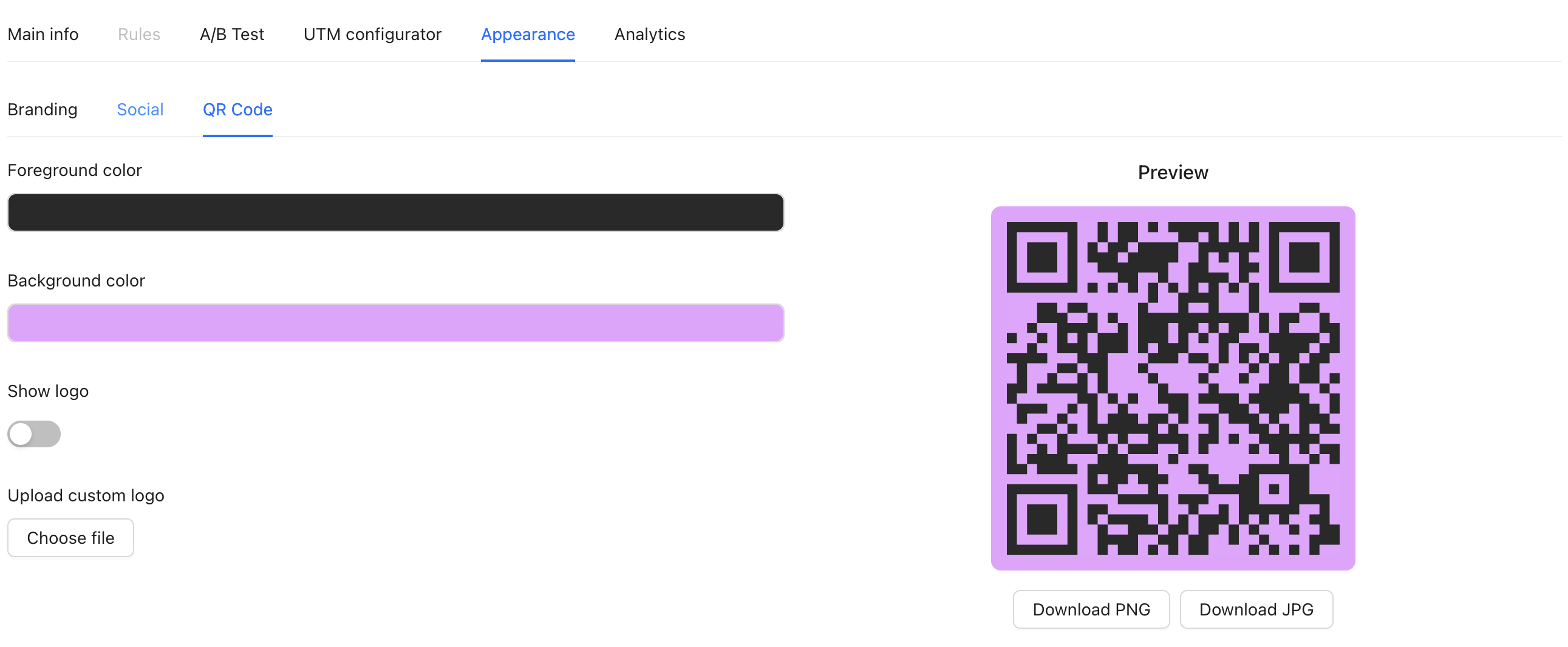
QR codes don't have to be black on white. They can use any foreground and background color combination - as long as there's sufficient contrast for scanners to read them reliably. Your brand's primary color as the foreground, a neutral or complementary background, and the QR code immediately becomes part of your visual identity rather than a foreign object stuck on top of it.
The lavender-background QR code in the screenshot above is instantly distinct from the sea of monochrome codes on everything else. It catches the eye. It signals intentionality.
Logo
QR codes use error correction - they're designed to still be scannable even when up to 30% of the pattern is obscured. This is what allows a logo to sit in the center without breaking the scan. Done well, a centered logo transforms a QR code from a technical artifact into a branded asset.
This is especially powerful on product packaging and business cards, where the QR code is competing for attention with everything else on the surface.
Download Format
Where the QR code is being used determines what format you need. Print materials need high-resolution PNG - vector-quality output that scales to any size without pixelating on a billboard. Digital use (email signatures, social posts, web pages) works fine with JPG. Having both options ready means no last-minute scramble when the printer asks for the file.
Where Branded QR Codes Make the Biggest Difference
Product packaging. The QR code on a product is scanned by people who've already decided to buy or are actively considering it. A branded code that leads to a demo, a how-to video, or a loyalty program registration converts that high-intent moment into an ongoing relationship.
Event materials. Conference badges, booth displays, and printed agendas all benefit from QR codes that look like they belong to the brand rather than being added as an afterthought. Attendees are more likely to scan something that looks deliberate.
Print advertising. A billboard or magazine ad with a QR code has one job: get people to scan. A branded code that matches the ad's visual language reinforces the call to action instead of creating a jarring visual break.
Business cards. A QR code on a business card is a promise: scan this and you'll find something useful. A branded code makes that promise feel credible. A generic one makes people wonder if it actually goes anywhere worth visiting.
The One Rule That Matters
Branded QR codes look better. But they still need to work.
Contrast is non-negotiable. A light pink foreground on a white background might look elegant but will fail to scan in anything less than ideal lighting. Always test your branded QR code in the actual conditions it will be used - poor lighting, small print size, screen glare - before it goes to print or live.
Everything else - colors, logos, formats - is creative freedom. The scan is the constraint. Design within it.
One Link, Infinite Formats
The most practical reason to use branded QR codes through a link management platform rather than a standalone generator: when you update the destination, the QR code stays the same.
Print 10,000 flyers with a QR code pointing to your campaign page. The campaign ends. With a static QR code generator, those flyers are now pointing to a dead page. With a smart link behind the code, you update the destination in seconds - the printed QR codes keep working, now pointing to wherever makes sense.
Branding and flexibility in the same package. That's what a QR code should be.
Related Topics:

Maksym Yaroshchuk
Founder & CEO at Revolink. Writes about link management, marketing automation, and growth strategies.